Diabetic and can’t get hard? It’s not your age. It’s sugar rust.
They track your A1C. Your eyes. Your kidneys. Your feet. Nobody tracks the complication that hits first — so most men spend years blaming themselves for something their disease did.
3 out of 4 diabetic men will face this complication. Almost none are warned.
If you’re a diabetic man over 45 and things don’t work like they used to, you’ve probably already built your own explanation.
It’s age. It’s stress. You’re tired. It happens to everybody.
Here’s what nobody at your doctor’s office told you:
3×
more likely to develop ED
10–15
years earlier than other men
3 in 4
diabetic men affected
Three out of four. And almost none of them were warned it was coming — or told why.
Here’s what’s actually happening. Picture a spoonful of sugar in a hot pan — melting, browning, hardening into that sticky glaze you’d need a chisel to remove.
Doctors call it glycation. A slow version of this is forming inside arteries 1.5mm wide.
A slower version of that exact chemical process happens inside the arteries of every man with years of elevated blood sugar. Doctors call it glycation. Men’s health doctors call it what it looks like: Sugar Rust. And the smallest pipes in your body — the two arteries that control your erections — rust shut first.
Your age didn’t do this to you. Sugar Rust did. Five signs prove it.
01sign.
Your morning erections faded first.
Healthy men wake up hard well into their 60s. It’s not about sex — it’s your body running a nightly pressure test on the blood vessels down there.
When high blood sugar starts damaging those vessels, morning erections are the first casualty. They don’t stop overnight. They fade — quietly, over months — usually a year or two before the bedroom trouble starts.
If your mornings went quiet, that wasn’t age slowing you down. That was blood flow shutting down.
02sign.
You can get hard. You just can't stay hard.
This is the one men torture themselves over — because if it starts, then dies halfway through, you figure it must be in your head.
It’s not in your head. It’s in your blood vessels.
Getting an erection takes a surge of blood. Keeping one requires trapping that blood under pressure. Sugar Rust stiffens the vessels and damages the trap. The surge still happens. The hold fails.
Age makes things slower. Sugar makes them quit halfway. If you’re losing it mid-act, that’s sugar.
✓The upside: caught at this stage, this is the most fixable sign on this entire list.
03sign.
The pills don't hit like they used to.
The blue pill works by amplifying one chemical signal — nitric oxide — that tells your vessels to open and flood.
Here’s the problem: years of Sugar Rust destroy your nitric oxide production. You can’t amplify a signal your body has almost stopped sending.
That’s why the pill that worked at 48 gets unreliable at 54. Not because you’re broken. Because a single-pathway pill was never designed for what diabetes does to a man’s blood vessels.
free · 60 seconds · physician-reviewed
Find out how much is still reversible.
A few questions about your situation. A clear answer about what's driving it — and what actually works for diabetic men.
REAL PRESCRIPTION · 30-DAY MONEY-BACK · DELIVERED DISCREETLY
04sign.
The sensation isn't what it was.
Sugar doesn’t just attack vessels. It attacks nerves — the same reason diabetic men get tingling and numbness in their feet.
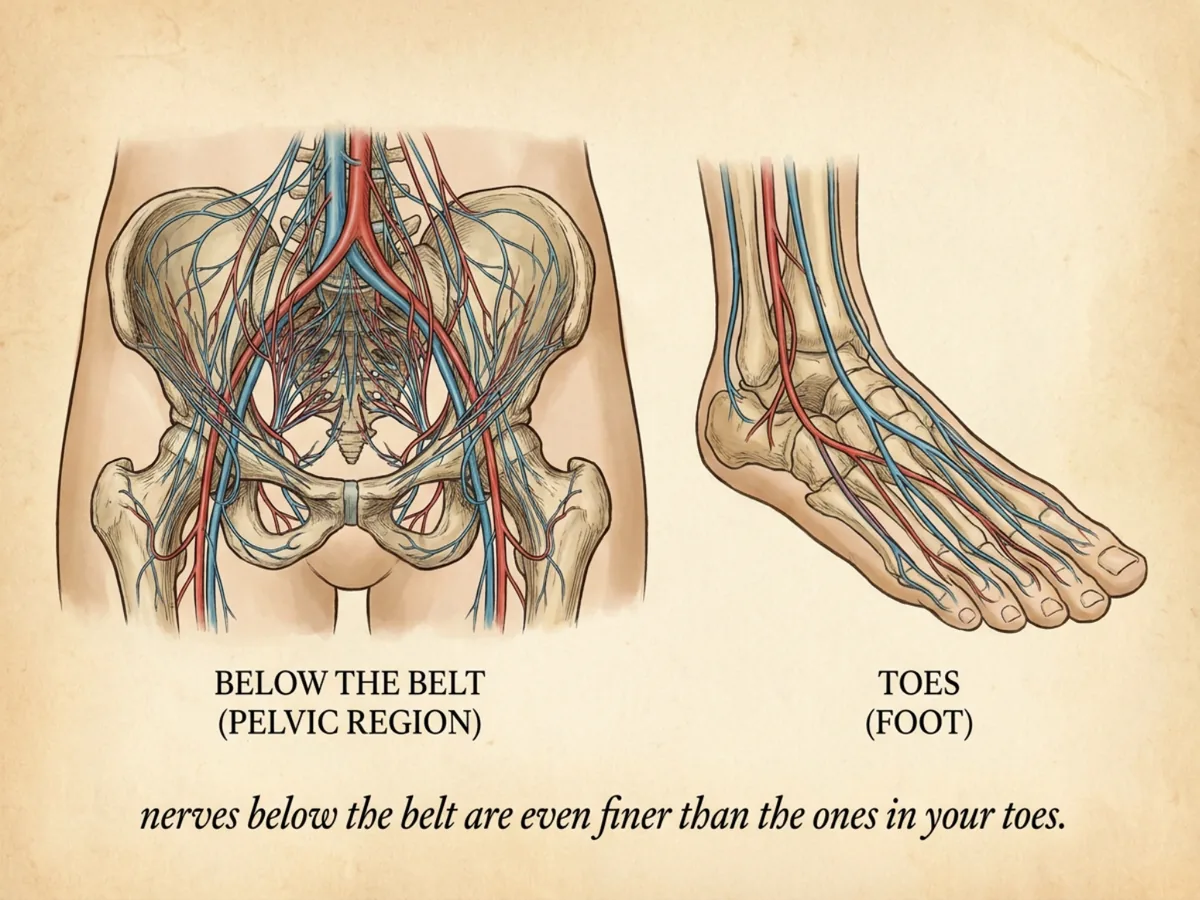
The nerves below the belt are even finer than the ones in your toes. If things feel duller than they used to, that’s not “getting older.” That’s diabetic nerve damage — and it has a name, a cause, and a clock on it.
05sign.
It started 2 to 5 years after your diagnosis. That's not a coincidence.
Think back. When did the problems actually start?
For most men it’s within two to five years of diagnosis — or of the years their sugar was creeping up before anyone caught it. Bad A1C stretches and bad months in the bedroom run together more than coincidence allows.
You never connected the dots because nobody handed you the pen. Now you have it.
the part nobody says out loud
Rust never sleeps.
Every year of elevated sugar adds another layer to vessels and nerves already under attack. The man who shrugs it off at 54 is fighting a harder fight at 58.
“Wait and see” is a treatment plan for exactly nothing.
The good news — and it’s real.
If you recognized yourself in two or three of these signs, you’re most likely in the stage where this is still very treatable. The blood flow is impaired — not gone. The signal is weak — not dead.
But diabetic ED almost never responds to the standard one-pill, one-pathway approach for long. It needs a strategy built for diabetic physiology — one that works on more than one pathway at once.
That’s exactly what the assessment below figures out: which signs you have, what’s driving them, and what approach actually fits your situation.
It was never your fault. It was never your age. It was sugar rust.
And starting today, it’s your move.
The questions you’re already asking.
"Will this mess with my metformin or my other meds?"
That's exactly what the physician review is for. A licensed doctor sees your full medication list and history before anything is recommended. Nothing replaces or changes your current prescriptions.
"Is this another gas-station miracle pill?"
No. Physician-prescribed treatment through licensed U.S. pharmacies — the same class of medication a urologist would discuss, built into a protocol designed for diabetic men instead of one-size-fits-all.
"Do I have to sit in a waiting room and explain myself?"
No. The assessment is online, the review is remote, and anything prescribed arrives in plain packaging. The only person who needs to know is you.
free · 60 seconds · physician-reviewed
Take the free 60-second assessment.
Answer a few questions. Get a clear answer about what's actually going on — and what to do about it.